
Speaking of Safety:

Remote Interpreters Report Unsafe, Stressful Conditions and Burnout at French Outsourcer TP

TP Language Line Workers


Executive Summary

Language interpreters employed by outsourcing giant TP who work remotely across the United States face unsafe and stressful conditions, along with isolation from their coworkers. Interpreters are coming together to form a union to address these concerns, but their employer is refusing to negotiate a fair process. 

The Communications Workers of America (CWA) is supporting the interpreters to organize and conducted a survey of 245 TP interpreters across two subsidiaries, LanguageLine Solutions and ZP Better Together, that found: 

  • More than three quarters of respondents (76%) strongly disagreed that TP provides enough time between calls for workers to recover; 
  • Eighty-one percent of respondents disagreed strongly (64%) or slightly (17%) that TP gives interpreters enough opportunities to connect with colleagues in their language group for mutual support. 
  • More than seventy percent of respondents feel emotionally drained from their work either every day (51%) or a few times a week (20%). 
  • Nearly three quarters of respondents experience back or neck pain daily (41%) or at least weekly (32%). 
  • Sixty-nine percent of respondents report their vision is affected by long hours looking at a screen either daily (39%) or at least weekly (30%).
  • Nearly sixty percent of respondents report the lack of an ergonomic workstation causes repetitive strain daily (38%) or at least weekly (18%). 

Unfortunately, workers lack a clear pathway to address these issues. Instead, interpreters view management as prone to punish them for speaking out, with 75% reporting they are concerned about retaliation if they raise concerns about working conditions with management.

Ultimately, many survey respondents said they are dissatisfied with their job and nearly sixty percent agree strongly (43%) or slightly (16%) that they will probably look for a new job in the next year. If TP would negotiate with workers to mitigate unsafe working conditions, the company could retain a more experienced workforce, benefiting the thousands of clients that rely on the critical service provided by TP’s interpreters.  
Introduction

Interpreters employed by French multinational TP (formerly known as Teleperformance) are organizing a union across the United States to address inadequate pay and poor working conditions, including management practices that create serious health and safety hazards. 

These interpreters work remotely supporting limited English proficient people and deaf and hard-of-hearing individuals in a variety of important interactions with government agencies, healthcare providers, courts and private businesses. 

Workers recently called on TP subsidiary LanguageLine Solutions to establish an elected worker committee on health and safety issues, as required under the company’s Global Agreement on Social Responsibility with UNI Global Union.1 The company rejected the workers’ request and said a health and safety committee already exists, despite none of the workers ever hearing of it. 

This report summarizes the findings of a survey of 245 TP interpreters about health and safety issues. The survey was conducted between April and June of 2026. Respondents include 161 interpreters employed by TP subsidiary LanguageLine Solutions, most of whom provide spoken language interpretation, and 84 sign language interpreters employed by TP subsidiary ZP Better Together. 


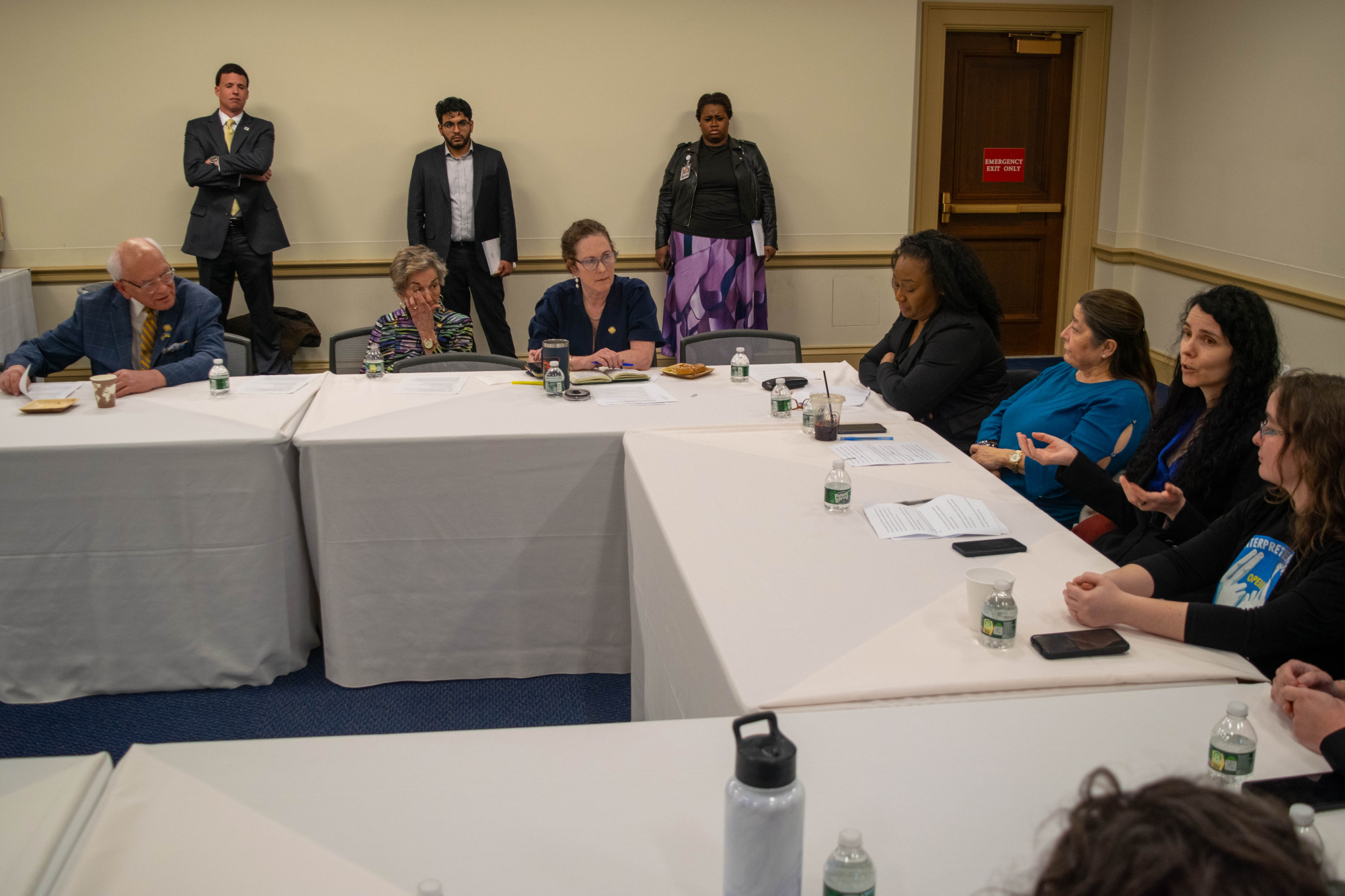
LLS lobby day.
TP interpreters meet with members of Congress to discuss their working conditions.

Interpreters report mental health harms from TP’s pressurized working conditions

Interpreters employed by TP in the United States face stresses that can be debilitating and seriously impact workers’ quality of life. Workers must field back-to-back calls with as little as fifteen seconds in between at LanguageLine and seven seconds between calls at ZP Better Together. Interpreters regularly experience vicarious trauma from the intense situations their clients face. 

  • More than three quarters of respondents (76%) strongly disagreed that TP provides enough time between calls for workers to recover; 
  • More than two-thirds of respondents disagreed strongly (52%) or slightly (16%) that their employer follows policies that protect interpreters from abusive clients; 
  • Eighty-one percent of respondents disagreed strongly (64%) or slightly (17%) that TP gives interpreters enough opportunities to connect with colleagues in their language group for mutual support. 

Compounding these stressful conditions, TP underpays and undertrains workers: 

  • Most respondents agree strongly (72%) or slightly (13%) that TP does not pay adequate wages to interpreters;2  
  • Three quarters agree strongly (51%) or slightly (24%) that interpreters are expected to spend unpaid time preparing for work or getting additional training; 
  • More than two-thirds disagree strongly (42%) or slightly (27%) that interpreters receive adequate training for the kinds of calls they are expected to handle. 

TP interpreters also face increasing job insecurity as TP has cut their hours involuntarily3 and tells investors it is ramping up AI automation efforts.4 Survey respondents expressed concern about TP’s intended uses of AI, with three quarters agreeing strongly (52%) or slightly (24%) that they are concerned that Artificial Intelligence will harm their job security or job quality. 

Interpreters employed by TP have similar concerns across spoken language and sign language, but some management practices and terms differ across the TP subsidiaries.

  • LanguageLine interpreters are evaluated based on “adherence” to schedule, a metric that three quarters of survey respondents disagreed strongly (58%) or slightly (18%) was fair and possible to meet; 
  • ZP Better Together interpreters are evaluated based on “availability”, which more than eighty percent of respondents disagreed strongly (46%) or slightly (36%) was fair and possible to meet; 
  • LanguageLine interpreters also face automated reprimands for logging in or out a minute early, a practice that 65% of respondents strongly agreed creates unnecessary stress. 

These conditions lead to a high level of stress and burnout at TP’s interpretation subsidiaries in the United States, as indicated in Table 1. 

Table 1. Please indicate how often you have felt this way while at

 DailyA few times a weekWeeklyMonthlyA few times a yearNever
I feel emotionally drained from my work51%20%14%6%7%2%
I feel a high level of stress from my job51%16%13%11%7%3%
I feel burned out by my job49%15%11%10%10%5%
I feel frustrated by my job48%16%13%11%8%4%
I feel dehumanized by my job44%14%10%9%11%12%

Interpreters elaborated on these feelings in comments about the impact of their working conditions on their mental health: 

“The working conditions are deplorable! The stress contributes to mental and physical conditions. I have had to seek medical help to manage my stress and anxiety issues due to this job and must quit this job because it is affecting my health, i.e., my blood pressure is elevated due to stress and anxiety.”

—LanguageLine interpreter with three years at the company


“I have done VRS [Virtual Relay Service] for 22 years. It has changed from caring about the employees to we are just a number. They just care about input and output.”

—ZP Better Together interpreter with four years at the company


“The back-to-back calls have been getting worse and worse as the years go by. Going from a Medical call with a Dr performing surgery that could last over an hour and having less than 15 seconds only before the next call comes in and it could be a 911 emergency call, FBI call or another high stress situation.”

—LanguageLine interpreter with eight years at the company


“I have been completely burnt out by VRS and the lack of paid breaks. I cannot pay the bills. I'm good at my job, but my quality suffers from constant call volume and that is upsetting to me when I am too drained to provide excellent service to every customer... I've quit most side commitments in my life because of the burnout. I've been going to therapy and have had medication but the one thing in my life that hasn't improved is how much work burns me out.  I've tried to use accommodations to support my needs but those accommodations ultimately were cut down to a negligible amount of assistance.”

—ZP Better Together interpreter with six years at the company 


“[I have] no contact with colleagues, no training by  specific language interpreters, no proper materials for my language, scared to take a bathroom break, no extra pay for working holidays, never get holidays off, cant use my time off earlier than 2 weeks in the future which is extremely difficult on me as a single parent of three children.”

—LanguageLine interpreter with three years at the company

Interpreters experience physical harms from working conditions

TP interpreters reported serious pain and long-term injuries related to their working conditions, as described in Table 2.

Table 2. Please indicate how often you have experienced this due to work

 DailyA few times a weekWeeklyMonthlyA few times a yearNever
Hoarse voice15%18%11%13%21%22%
Back or neck pain41%16%18%9%9%7%
Headaches20%20%18%19%13%9%
Lack of ergonomic workstation causing repetitive strain38%9%11%14%13%15%
Vision affected by long hours looking at a screen39%14%16%12%8%11%
Physical harm or discomfort due to inadequate time for bathroom breaks32%16%13%7%16%16%

A majority of LanguageLine workers also report hearing-related issues, with 35 percent of respondents experiencing ringing in their ears at least weekly, another third experience it at least a few times a year, and only 28 percent never have this issue. Among 27 percent of LanguageLine respondents, constant headset use is correlated with actual hearing loss experienced at least weekly. 

For sign language interpreters, wrist strain is an occupational concern. A majority (56%) of respondents from ZP Better Together reported wrist strain or carpal tunnel at least weekly, with 29 percent reporting it as a daily issue and only six percent reporting that it is never an issue.

Interpreters' comments provide insight on the seriousness of the physical safety issues they experience: 

“I have constant neck and back pains due to sitting for 8 hours straight. The requirements are that we use the company's equipment and hardwired internet, so it's not possible to get up, stretch or walk around.”

—LanguageLine interpreter with three years at the company


"I do not have time to go to the restroom, and I am constantly speaking because calls come in nonstop. By about two-thirds of the way through the day, my voice is consistently hoarse... After more than 10 years in this role, my hearing has clearly declined. Hearing loss is permanent and cannot be restored."

—LanguageLine interpreter with more than ten years at the company


"I have several disc herniations in my lumbar and cervical spine from working VRS."

—ZP Better Together interpreter with four years at the company


"I have had ear pain because we are required to use the headsets they provide. I now have tinnitus, which I believe is due to wearing a headset 36 hours a week for years and the limited volume control."

—ZP Better Together interpreter with less than one year at the company


"We are expected to provide our own ergonomic workspace. I currently have a poorly supportive chair because the cost of a better one is prohibitive. I bought my own ergonomic mouse pad, which has greatly helped."

—ZP Better Together interpreter with seven years at the company

Interpreters fear retaliation and perceive management as unreceptive to concerns

Nearly three-quarters of survey respondents believe that TP management is very unreceptive (62%) or somewhat unreceptive (11%) to worker concerns about health and safety. In fact, workers view management as prone to punish them for speaking out, with 75% reporting they are concerned about retaliation if they raise concerns about working conditions with management. 

Interpreters dissatisfied with conditions at TP and many leave

Ultimately, these conditions result in workers feeling deep dissatisfaction with their jobs and developing strong turnover intentions. 

  • Nearly seventy percent disagree strongly (41%) or slightly (27%) with the statement “all in all, I am satisfied with my working conditions”;
  • Two-thirds agree strongly (43%) or slightly (24%) that each day at work feels like it will never end;
  • Nearly sixty percent agree strongly (43%) or slightly (16%) that they will probably look for a new job in the next year.

This high turnover intention is reflected in the relatively low tenure of survey respondents. A majority of respondents (56%) reported tenure of three years or less at TP, and less than a quarter (24%) of respondents had worked at the company more than five years. 

Conclusion

The findings of this survey demonstrate that TP should heed workers’ call to engage in constructive negotiations over working conditions, including establishment of elected health and safety committees and full implementation of the UNI agreement in the United States. 

Government officials are increasingly raising concerns about TP’s labor relations in the United States.5 They have joined a chorus of global workers and unions urging a more sustainable approach to its workforce6, without which TP will undermine the unique value of its human capital – people’s understanding of nuance, culture, pain and the need to be understood. Ironically, TP could lose its way by focusing on the trendy idea of AI automation instead of renewing its commitment to its most valuable resource, its employees.

Citations

  1.  Global Agreement on Social Responsibility Between Teleperformance SE and UNI Global Union, at page 6, https://www.tp.com/media/fewdadsx/tpse_uni-global_global-agreement-on-social-responsibility_2022-12-01.pdf.  

  2.  For more background on wage rates at LanguageLine Solutions, see CWA’s October 2025 report based on a previous survey, https://cwa-union.org/languageline-interpreters-speak-out.

  3.  NPR, “How algorithms wreaked havoc with these workers' schedules and cut their pay,” May 3, 2026, https://www.npr.org/2026/05/03/nx-s1-5786926/jobs-labor-productivity-languageline-unionize

  4.  TP 2025 annual report, page 11, https://www.tp.com/media/uwsk4jpm/20320_tp_ri_gb_2025_mel.pdf

  5.  See, for example, CWA, press release, “NYC Lawmakers Demand LanguageLine Solutions Respects Union Organizing As Workers Take Action on Health & Safety Concerns,” April 16, 2026, https://cwa-union.org/news/releases/nyc-lawmakers-demand-languageline-solutions-respects-union-organizing-workers-take; Congressional Labor Caucus, “Labor Caucus Urges Teleperformance to Respect Workers’ Right to Organize,” February 26, 2026, https://laborcaucus.house.gov/media/press-releases/labor-caucus-urges-teleperformance-to-respect-workers-right-to-organize

  6.  LLS Workers United, Instagram, November 21, 2025, https://www.instagram.com/p/DRVTtz_ibNR/?utm_source=ig_web_copy_link&igsh=MzRlODBiNWFlZA==