LANGUAGELINE INTERPRETERS SPEAK OUT

Low Pay and Stressful Conditions Are Bad for Workers and Clients
LLS Workers Speak Out

EXECUTIVE SUMMARY


Workers are organizing a union at LanguageLine Solutions (LLS), which provides government and private sector clients with remote interpreting services across the United States. A new survey conducted by the Communications Workers of America (CWA) shows that interpreters face stressful working conditions and low pay, leading to high turnover and putting at risk the quality of service they are able to provide. 


Survey findings include:

  • Interpreters who responded to the survey are not well compensated for their work, earning an average wage of $20.19 per hour, and reporting low and infrequent pay increases. As a result, eighty-seven percent of survey respondents struggle to make ends meet and rely on friends, family, or public assistance. 
     
  • Strict “adherence” metrics that prevent workers from taking adequate breaks present risks to service quality. Most respondents (83%) felt that their ability to interpret well for Limited English Proficient clients (LEPs) is impacted negatively by Language Line adherence policies either some of the time (62%) or most of the time (21%). 
     
  • Inadequate training also harms service quality – 57% of respondents disagreed either strongly (35%) or slightly (22%) that they receive adequate training to do all aspects of the job. 
     
  • Interpreters reported significant unfair or illegal pay practices, such as not being paid if they are unable to perform work due to technical problems with Language Line systems (44%); being unable to take meal, bathroom, or rest breaks during their shift (32%); and being required to perform work off the clock (27%).
     
  • Language Line interpreters report variable weekly schedules that make their lives extremely difficult to plan and make it hard to hold a second job, which is also made worse by Language Line’s noncompete policy barring employees from any other employment as an interpreter. 
     
  • Language Line’s low wages and stressful work environment leads to high employee turnover. Fifty-six percent of survey respondents had worked for Language Line for two years or less. Nearly three-quarters of respondents (74%) reported that they will look for a new job in the next year.


CWA is encouraging Language Line clients to investigate potential harms to service quality from poor working conditions and contact Language Line to discuss the issues raised in this report.
 

INTRODUCTION


Interpreters employed by LanguageLine Solutions are unionizing with the Communications Workers of America to address low wages, lack of clear communication channels with management, and unsustainable metrics that harm interpreters and those that they serve. These interpreters work remotely supporting Limited English Proficient people (LEPs) in a variety of important interactions with government agencies, healthcare providers, courts and private businesses.

This report summarizes the findings of a survey of more than a hundred Language Line interpreters about their wages and workplace stress, and how poor working conditions affect interpreters’ ability to provide quality interpreting services to often vulnerable, limited English proficient populations.1 
 
Interpreters care about the communities they serve, but survey respondents feel that Language Line’s policies hinder the quality of service they can provide. Low wages and poor treatment from their employer cause many experienced interpreters to leave the company. One interpreter with four years’ tenure explained, “I feel the instability of our employment creates incredible stress. We want to love our job and provide the best service to our community, but I don't feel appreciated. It doesn't matter how much the company tells us they appreciate us, our current situation speaks to the opposite unfortunately.”
 
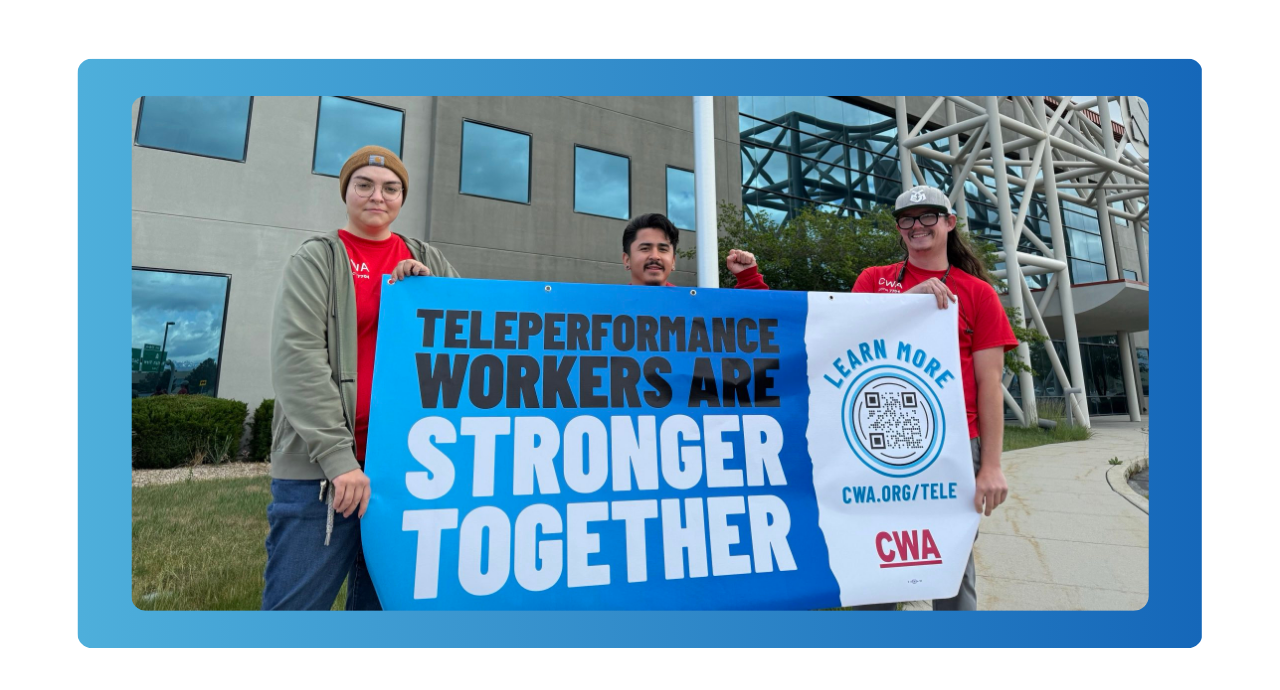
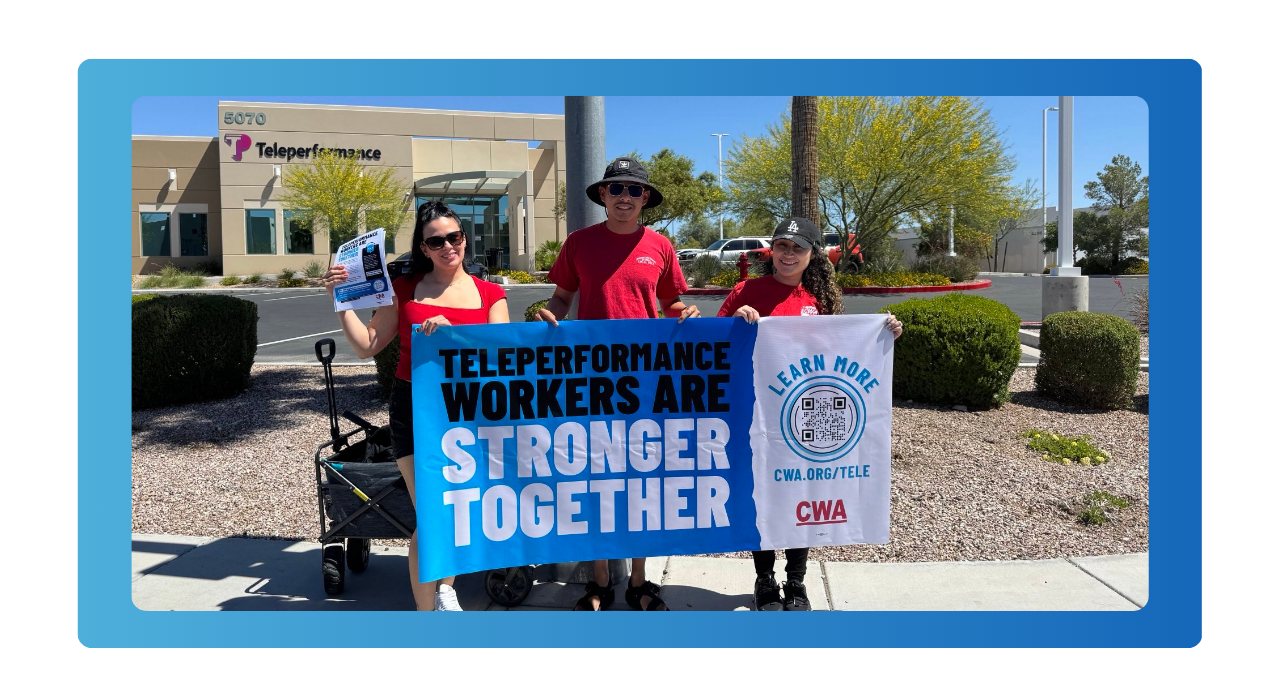
CWA is supporting LLS interpreters to organize a union in order to address the issues described in this report. Language Line’s parent company Teleperformance has refused requests to implement a global framework agreement promoting freedom of association that it negotiated with UNI Global Union, despite agreeing to implement the same framework in many other countries around the world. 

Language Line Workers Take Action


INTERPRETERS FACE LOW PAY AND INADEQUATE RAISES


Interpreters report that their wages at Language Line are low and view the company’s policies regarding pay as unfair. The average reported wage was $20.19 per hour. Ninety percent of respondents disagreed either strongly (73%) or slightly (17%) that they were compensated fairly. Only 6% believe that their compensation is fair.

Language Line interpreters’ wages are too low to make ends meet, with only 13% reporting their wages are enough to cover basic expenses. Three quarters of survey respondents (74%) said they rely on support from family or friends to get by and an additional fourteen percent of survey respondents said they rely on some form of public assistance with the most commonly reported programs being: SNAP/“food stamps” (9% of respondents) and Medicaid/SCHIP (9% of respondents).

Language Line gives raises that are small and inconsistent. Of interpreters who have worked for Language Line for at least two years, one third of respondents reported they have not received a pay increase in more than two years. When Language Line does raise wages, increases are often very low: Of the survey respondents who had received a raise at some point while employed by Language Line, 81% said their last pay increase was $1 or less per hour.

Language Line is capable of compensating interpreters fairly. Language Line’s clients, the businesses, government agencies, and healthcare providers that contract with Language Line, pay per minute for live interpretation. The contracts with public entities obtained by CWA show that Language Line is paid between $1.35 and $2.16 per minute ($81 to $129.60 per hour) for interpreters’ services via video and $0.69 to $1.07 per minute ($41.40 to $64.20 per hour) for interpretation via audio. Interpreters are paid only 20% of the average client rate for video calls and 40% of the rate for audio calls.2 Individuals can also pay for Language Line Services at $4.95 per minute for video calls, in which case interpreters earn 7% of the total.3

In recent months, Language Line has seen declining call volumes,4 but instead of offering interpreters voluntary unpaid time off so those who want to can take the option, the company has imposed significant reductions in hours on workers. Seventy-nine percent of survey respondents said that variable hours cause them financial hardship.

Variable schedules also make finding other employment difficult. Language Line makes this even harder by imposing an overly broad non-compete policy that bars workers from doing other interpretation work while employed by Language Line.5


Workers described the hardship of variable hours: 

  • “I only worked here for a little over 5 months and every day seeing hour reduction on chat was very stressful, and now I got an email notice that I would be getting a reduction of work hours next week… I'm not here as a volunteer, I really need that 40 hours as we agreed on my contract.” - Interpreter with less than a year tenure at Language Line
     
  • “The instability of my scheduled work hours has caused me great distress and severely impacted my mental health. I have a mortgage to pay for and I rely on this income being stable in order to avoid homelessness.” - Interpreter with 5 years’ tenure at Language Line
     
  • “The amount of hours cut being given out randomly and in large quantities almost made me unable to pay some bills. Duties are changed suddenly and effect immediately.” - Interpreter with 2 years’ tenure at Language Line


Survey respondents reported a variety of unfair or illegal pay practices at Language Line:

  • 44% said they were not able to perform work due to technical problems with Language Line systems and were not paid for it.
     
  • 32% said they were not able to take meal, bathroom break, or rest breaks during their shift; 
     
  • 27% said they were required to perform work off the clock; 
     

An interpreter with more than 10 years’ tenure described off-the-clock work: “They require the interpreters to log out if there are some technical issues and we have to try to solve them before we contact the Tech department. Then we are not paid for the time we were logged out because they say it could be due to our faulty internet connection. Adherence policies are not clearly explained. Their policies are more to the benefit of the company.”


INTERPRETERS REPORT STRESSFUL CONDITIONS AND UNFAIR METRICS


Language interpreting is mental and emotional labor. Interpreting between two languages in even everyday interactions takes concentrated effort on the part of the interpreter. In the case of tense, emotional conversations, like in courtrooms and with healthcare providers, interpreting can be very emotionally taxing.


Survey respondents reported that their work at Language Line has taken a significant toll on their mental health:

  • The majority of respondents (62%) reported that they feel emotionally drained at work at least a few times a week; 39% of the respondents said they feel emotionally drained  every day.
     
  • The majority of respondents (52%) reported that they feel burned out at least a few times a week; 36% of respondents felt this way  every day.
     

Language Line interpreters are evaluated based on “adherence”, a common call center management system that requires workers to follow a specific schedule of time on the phones. Based on survey responses, it appears this adherence system prioritizes the number of minutes billed through Language Line’s platform over the wellbeing of the interpreters who serve the clients: sixty-two percent of respondents disagreed either strongly (34%) or slightly (28%) that Language Line adherence policies were reasonable, whereas only 19% agreed that the policies were reasonable.

Similarly, 79% of respondents disagreed either strongly (59%) or slightly (20%) that they had enough time between calls. Only 9% believed there was adequate time between calls. An interpreter with two years’ tenure explained, “There's no break between the calls. After telling a LEP their child passed away, they have been diagnosed with terminal diseases, and witnessing the LEP crying uncontrollably, LLS should provide us a few minutes to recover from it.”


Other interpreters echoed this frustration with the harsh conditions at Language Line:

  • “No break in between the calls exhausts my life resources needed for proper, accurate interpretation. I can't translate well enough when I am exhausted after back-to-back calls.” - Interpreter with 2 years’ tenure
     
  • “The constant back to back calls are mentally exhausting and it affects my interpreting skills, my memory retention, etc. Sometimes, I start stuttering because of it. Sore throats are often.” - Interpreter with 7 years’ tenure
     
  • “Calls are back to back. And we sometimes do not get a chance to rest between calls. And this affects our work performance. And we are constantly monitored, we get penalized for any mistakes. At the end of my shift, my throat hurts because I feel like I'm on the phone for at least 7 hours straight non-stop.” - Interpreter with 2 years’ tenure 
     
  • “We have so many days that we have difficult calls and they are back to back, to the point where I start to lose my voice. Now with the company cutting hours badly and having many interpreters under forced days off, the volume is high and at the end of the day we might not even have that empathy we would have earlier in the day or if call volume were lower.” - Interpreter with 2 years’ tenure

Language Line’s policies and practices related to “adherence” present risks to service quality. A large majority of respondents (83%) felt that their ability to interpret well is impacted negatively by Language Line adherence policies either some of the time (62%) or most of the time (21%).


Overall, a majority of respondents (58%) reported that they feel frustrated by their job at least a few times a week with 39% of respondents feeling this way every day. Interpreters explained some of their frustrations:

  • “Humane and intercultural approaches are important while working with people - we are not robots, we are humans and let's remember that! Some of the policies do not take this into consideration.” - Interpreter with less than a year tenure
     
  • “Management do not allow us to ask for multiple repetition and that is serious. A lot of time, due to the volume of receiver, ipad or the phone customer use, or sometimes many staff are present so the interpreter can't hear well so repetitive repetition is asked and we are not to or should not ask too much time for repetition per a senior adviser. I find that inadequate in doing my job.”- Interpreter with less than a year tenure  

The working conditions at Language Line make it difficult for interpreters to remain in their jobs, as evidenced by a constant churn of employees and loss of expertise. A majority of respondents (57%) know someone who left the company due stress or working conditions and 36% of respondents know an interpreter who was fired for not meeting Language Line’s adherence policies.


Most respondents (87%) did not believe that management takes interpreters’ concerns about workplace stress seriously. Only 3% thought that management does take workplace stress seriously. Workers described an unsustainable level of stress: 

  • “I feel the instability of our employment creates incredible stress. We want to love our job and provide the best service to our community, but I don't feel appreciated. It doesn't matter how much the company tells us they appreciate us, our current situation speaks to the opposite unfortunately.” - Interpreter with 4 years’ tenure
     
  • “The lack of communication and constant threats from management contribute to my stress greatly. The policies make the work environment hostile and makes me dread my work every day” - Interpreter with 8 years’ tenure


INTERPRETERS WORRY THAT INADEQUATE TRAINING PUTS QUALITY AT RISK


Language Line interpreters strive to interpret conversations to the best of their ability. In certain settings, specialized terminology or context is required for accurate interpretation. However, many Language Line interpreters do not have specialized training or enough medical or legal background to translate terms to the target language. In fact, 57% of respondents disagreed either strongly (35%) or slightly (22%) that they receive adequate training to do all aspects of the job. Only 23% agreed either slightly (15%) or strongly (8%) that they had appropriate training. Most respondents (84%) feel that Language Line does not offer adequate training to interpret for more complex or specialized calls.

 Interpreters are ranked into “levels” which roughly indicate the complexity of the conversation they are qualified to interpret. New hires start as Level 3, which handles general bank and insurance-type calls; Level 4 interpreters can take healthcare calls and Level 5 interpreters can take calls in a legal setting. Language Line interpreters who show that they can handle more specialized settings are advanced to a higher level. However, 70% of the interpreters who had advanced to a higher level said that their pay did not increase.

An interpreter with two years’ tenure described this dynamic: “LLS chooses when to promote us and they get to choose the level/position.  Additionally, the promotion is without a raise, and we have no say in it. I called to let them know that I did not ask to be promoted, and demand a raise with the promotion. I was told that if anything, LLS is doing me a favor, because I am learning and getting more skills.”

For sensitive and specialized conversations, like in legal or healthcare settings, interpreters are expected to be at a level 4 or 5. However, many interpreters report being assigned to calls outside of their level of expertise. A majority (52%) reported that they have interpreted for people involved in legal cases without training on legal terminology either a few times (44%) or many times (8%). Forty percent reported that they interpreted for people facing medical issues without training on medical terminology either a few times (27%) or many times (13%).

Workers are often implicitly encouraged to study on their own time. An interpreter with three years’ tenure wrote, “We are never given any paid time to learn necessary knowledge to perform the job well. We are never given any paid time to learn company policy so I wasted some sick time and paid vacation...”

The lack of training can have dramatic consequences for clients, leaving interpreters stuck if they do not have the background to interpret to the best of their ability. A third of survey respondents reported dropping a call when they felt overwhelmed or unprepared by the subject matter to interpret the conversation effectively.


INTERPRETERS’ JOB DISSATISFACTION LEADS TO HIGH TURNOVER


Language Line’s low wages and stressful work environment leads to high employee turnover. Fifty-six percent of survey respondents had worked for Language Line for two years or less. Nearly three-quarters of respondents (74%) reported that they will look for a new job in the next year with 42% saying they strongly agree that they will find other employment.

An interpreter with one year tenure explained: 
 

When management enforces rigid adherence metrics and fails to provide functioning tools or timely support, it directly undermines our ability to serve LEPs effectively. Interpreting requires focus, presence, and emotional regulation. When we're overloaded with back-to-back calls, given broken platforms with no training, and penalized for taking necessary breaks, we're not being set up to succeed — we're being stretched to the point of burnout.  The pressure to maintain perfect metrics under unrealistic conditions reduces us to numbers instead of professionals. That kind of environment erodes the quality of service we can offer to LEPs, who deserve better. We're expected to deliver care and clarity in high-stakes situations while management seems more concerned with control than support.

LLS Workers Speak Out


RECOMMENDATIONS TO LANGUAGE LINE CLIENTS


CWA encourages clients of Language Line Solutions (LLS) to contact the company to discuss the issues raised in this report and investigate potential harms to service quality from poor working conditions. Workers are calling on the company to agree to the following recommendations: 

  1. Implement the Teleperformance-UNI Global Agreement on Social Responsibility in the United States, establishing a pathway to unionization for U.S.-based Teleperformance employees through a neutrality agreement.
     
  2. End the practice of hour reductions for LLS interpreters. This practice causes financial hardship for interpreters, who lose regular hours and expected income. This is not a sustainable practice for retaining qualified interpreters at LLS.
     
  3. Raise wages to fairly compensate and retain qualified interpreters.
     
  4. End Language Line’s Non-Compete policy. Employees should not be restricted from seeking other interpretation work while employed at LLS, especially when the company is unable to provide 40 hours of work per week consistently.


ENDNOTES

  1. CWA’s survey ran from June 4 to July 30, 2025 and had a total of 117 respondents, a sample representing 3.3% of the approximately 3,400 interpreters employed by the company. Survey responses were solicited through online ads and worker networks.
  2. The average for video calls is $1.71 per minute or $102.9 per hour, divided by the average reported wage of interpreters of $20.19 per hour is 20%. The average for audio calls is $0.84 per minute or $50.50 per hour, divided by the average reported wage of interpreters of $20.19 per hour is 40%.
  3. Language Line personal interpreter services cost $4.95 per minute for video calls, as of 4/25/25. https://www.languageline.com/personal-interpreter. This equates to $297 per hour. $20.19 is 7%.
  4. The company described its Language Line services as being impacted by “the volatile business environment” on its quarterly earnings call, https://www.tp.com/media/ufuoikkq/tp-press-release-q1-2025-ev-def-1.pdf.
  5. Language Line’s non-compete policy states, in part: “The Company has determined that Company employees cannot provide interpreting/translating services to or on behalf of any Company competitors because to do so creates a conflict of interest."