Search News
For the Media
For media inquiries, call CWA Communications at 202-434-1168 or email comms@cwa-union.org. To read about CWA Members, Leadership or Industries, visit our About page.
Google Fiber And The Digital Divide
Google just picked the first Kansas City neighborhoods to get wired into its new fiber-optic network – leaving a handful of low-income communities stranded on the wrong side of the digital divide.
Twenty-two neighborhoods in the predominantly poor, African-American eastern half of the city missed Google’s pre-registration sign up goals and will not be getting the service in this first round, reported The Kansas City Star. But the newspaper noted the digital divide was “far less pronounced that first feared, thanks to an aggressive, last-minute marketing campaign by Google.”
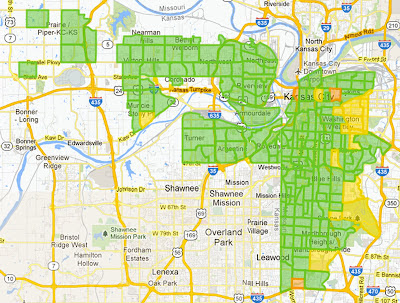
Source: Google Fiber Blog
Google Fiber will create 1 gigabit per second broadband connections – 100 times faster than the average US connection – in a series of "fiberhoods." Residents in the selected areas can pay $70 a month for just an Internet connection or $120 for a package that includes TV service with a Nexus 7 tablet that serves as a remote.
Ultra-high-speed Internet holds the promise of businesses growth, expanded educational opportunities and lower health care costs. But, after Google announced neighborhoods would have to pre-register a certain percentage of households to get the service, Kansas City residents noticed that those most in need of the service were being abandoned.
“This is just one more example of people that are lower income, sometimes not higher educated people, being left behind,” Margaret May, the executive director of the neighborhood council in Ivanhoe, told The New York Times. “It makes me very sad.”
Mona Price, the dean of instruction at Kansas City Public Schools’ Central Academy of Excellence told the Kansas City Star, “It’s not fair to the kids in urban settings who are trying to get an education.” Karen Hostetler, a resident of the East Argentine section of the city, lamented, “It does not have the feel of the universal access that was part of the initial description.”
As our Speed Matters blog points out, you might notice a parallel with Verizon's fiber service, FiOS. Although it was built on Verizon's landline footprint in the Northeast, FiOS too skipped the poorer sections of metro areas around the country. Washington DC, New York and Philadelphia managed to convince Verizon to wire their cities, but Boston, Baltimore and Buffalo have watched as FiOS zoomed by large swaths of their low-income residents.
With its high-tech demographic resources, Google certainly knows where the people live, work, play and study. But instead of making every effort ensure all residents had an equal chance to be on the right side of the digital divide, Google scrambled to dam a torrent of bad press about the segregation of neighborhood pre-registrations along Troost Avenue, the city’s historic socioeconomic and racial fault line.

Source: Wired
Over the weekend, Google made last-ditch sales pitches to residents in the eastern part of the city, and the company swiftly reversed its original policy that neighborhoods failing to sign up would be forever locked out.
Kansas City waived a number of regulations and fees that cities typically require of carriers when they seek to deploy high-speed and video networks. If a corporation is going to spend public funds on a new network, it has a duty to make the build out as fair and inclusive as possible.
Google’s model raises serious questions about how we are going to get high-speed networks to all Americans. This is not the answer.